Showing posts with label Asia. Show all posts

Thursday, June 7, 2012

A sanctuary from everyday reality


Located in Petitenget close to the border of Seminyak – a bustling residential area in the heart of Bali, Paya-Paya Villa is a stylish three-bedroom holiday retreat that makes a dramatic statement in contemporary design. Built by Aboday Architects, Paya-Paya Villa is an exotic haven of infinite comfort that does not compromise personal space or privacy.


Luxury, personal space, state of the art technology and zestful and stylized contemporary design does not escape anyone staying at this Bali villa. The two-storey building is arranged around courtyards and surrounded by water of varying depth, which creates a shallow pond at the entrance, Jacuzzi and large swimming pool. Guestrooms contain Refrigerator and Jacuzzi for your comfort. The three impressive air-conditioned rooms are stocked with 4-star quality amenities such as TVs with Satellite and a home entertainment system an IDD telephone, and high speed Broadband Internet. When it is time to relax, this Bali hotel offers Swimming pool and Spa services on site. Rates for entire villa: US$ 295(low season), US$330 (High) and US$ 350 peak season.

Tuesday, December 13, 2011

The most beautiful opera houses in the world


Opera de Monte Carlo
Located in the principality of Monaco, the Opera de Monte Carlo was opened in 1879. Designed the magnificent and extravagantly, the opera house was recently renovated. Over 80,000 gold leaves were applied to paintings and moldings, a five-ton chandelier has been entirely rebuilt. As it seats only 524, it is often difficult to get tickets. This the only opera house in the world to feature exterior views (thanks to the windows overlooking the Mediterranean) from within the concert space.


Teatro di San Carlo
Located in Naples, this is the oldest opera in Europe that has never closed the door. Opened on 4 November 1737 and then it was the largest in the world with its 3300 seats. Teatro di San Carlo is included in World Heritage by UNESCO.


The Mariinsky Theatre
Opened in 1860, this is pre-eminent theater is located in St. Petersburg, Russia. Named after Empress Maria Alexandrovna, wife of Tsar Alexander II and there is a bust of the Empress in the main entrance foyer. The building was severely damaged during the 900-day Siege of Leningrad, but later restored in 1944. With its marvelous 1,625-seat auditorium it is one of the greatest world class music theatres.


Bavarian State Opera
Built in 1818, Bavarian State Opera is located in Munich and features an impressive exterior and a magnificent interior. Destroyed in World War II it was moved to another place and built in its original form. Re-opened in 1963, the State Opera seats 2,100 people. Today the opera is among the most famous in the world.


Teatro Amazonas
This opera is in the heart of Manaus, deep in the Amazon rain forest of Brazil. Opera House was constructed during the Belle Epoque – the era of rubber that makes Manaus one of the most prosperous cities on the continent. The dome of the opera is covered with 60,000 ceramic tiles imported from France and currently has 701 seats


Romanian Athenaeum
This concert hall is one of the most beautiful buildings in Bucharest. It was built in 1888 in neoclassical style by architect Albert Galeron and considered as one of the architectonical jewellery of Romania. The auditorium (28, 50 m in diameter and 16 m high) having a special acoustics, seats 600 in the stalls and another 52 in loge seating.

Wanderlust Hotel, Singapore


Wanderlust is a left-field and totally experimental boutique hotel set to draw madcap voyagers and curious travellers to its doorstep. Located in Little India district in Singapore, where a bustling cultural enclave where Indian immigrants once settled, and the building was originally an old school built it 1920s. With four thematic levels of 29 rooms by award winning Singapore design agencies, each group was given full creative freedom.


The first level is the Lobby Level – Industrial Glam by Asylum A juxtaposition of the surrounding’s setting and contemporary design. Level 2 is Eccentricity by :phunk Studio. Colours everything from the walls to the neon lights and the rainbow corridor leads to a outdoor deck with a customised mosaic-tiled jacuzzi. Level 3 – Is it just Black and White by DP Architects. Walk across the black corridor and enter into the contrasting white rooms to discover Origami and Pop-Art works. Level 4 – Creature Comforts by fFurious. Get cosy with friendly monsters in each room that presents a different vibe and be assured of a fantasy-filled experience.


The lobby and restaurant Cocotte were done up in a distinctive industrial flair, which provide the perfect setting for the mismatch of furniture from Tom Dixon to Frank Gehry. Cocotte serves up a French menu and has large tables for communal dining, a small detail that very much meshes with the interactive element of traveling. Encouraging social interaction and communal dining, dishes at Cocotte come in sharing portions so guests can enjoy a unique dining experience and sample a variety of scrumptious creations by the chefs. Rooms, which also come with Kiehl’s toiletries and iPod docks, run from $300 to $650 Singaporean dollars.


Haji Lane, Singapore


Haji Lane is a small-scale shopping in Singapore‘s hidden retail destination. Singapore has enormous, glittering shopping malls in and around Orchard Street which are wall-to-wall major-brand retailers, the stuff of a shopaholic’s dream. Anyway for those seeking something more intimate, the indie boutiques on Haji Lane are far from the roaming mall rats. Beautiful boutiques showcase rising Singaporean designers, as well as other designers from Asia and beyond, lining a narrow, backstreet of the tranquil Kampong Glam area – also known as the Arab district.


Don’t miss stores on the second floors of the charming shophouses; look out for mysterious flights of stairs through doorways at street level because you might just find find a new little world at the top of them. United Label is a wonderful shop, a womenswear brand by a Thai designer living in Singapore, as well as a selection of adorable stationery culled from around Asia. Near the entryway a staircase leads to a floor stocked with clothes from different labels. There are a few racks of items that have been majorly discounted, while others are dedicated to items like delicate, screen-printed tees.


At one end of Haji Lane is Soon Lee (no. 73), which stocks a mix of chic womenswear, accessories and lifestyle items from Hong Kong, Korea and even the Philippines. The boutique’s size (basically two shophouses combined into one) gives way to a large selection for browsing. Balancing out the shopping element, a few cafes and rest stops provide a place for breaks. A Thousand Tales (no. 55) is an all-in-one art gallery, cafe, bar, restaurant and furniture complex. While the menu next door at Bar Stories (no. 57A) sells drinks like mojitos and caipirinhas, visitors are invited to ask the bartender to make something special for them. The Scandinavian-inspired furniture is used as seating for patrons, who can buy it right there if they like it enough.


Pluck (no. 31/33) focuses more on housewares, but the cafe inside offers a revolving selection of homemade ice cream in a variety of flavors. The standouts are the Asian-inspired flavors, such as green tea with red beans or cashew-infused yogurt. There are also flavors made with alcohol, like the refreshing lychee martini.

Monday, December 12, 2011

The Valley of Flowers – magic land of peace of mind


Valley of Flowers is extremely beautiful valley located high in the Western Himalayas, India. Described by climbers and botanists for over a century, this extremely diverse terrain is home to over 500 many rare and endangered species, including Himalayan brown bear, snow leopard, baralat (Himalayan blue ram) and more.


The national park stretches over an expanse of 87 km² the reserve and it is situated at an altitude of 3500 – 4000 m. Almost inaccessible to tourists due to the high altitude, the park is still considered one of the most beautiful places in the world. Getting to the Valley of Flowers requires a trek of about 17 km (Grade : Moderate) – a dream for all explorers. The park is in the UNESCO World Network of Biosphere Reserves since 1988.


The park is home to huge variety of fauna and flora including musk deer, red fox, Himalayan Golden Eagle, Snow Pigeon etc. and a huge variety of butterflies. The flowers include mostly orchids, marigold, daisies and anemones but 31 species are recognized as endangered species, while 45 others are medicinal plants, applied daily by local residents, including Dactylorhiza hatagirea, Picrorhiza kurrooa, Aconitum violaceum, Polygonatum multiflorum, Fritillaria roylei and Podophyllum hexandrum.

Thursday, December 8, 2011

The biggest stadiums in the world


1. Rungrado May Day Stadium
Situated in Pyongyang, North Korea this monumental stadium contains an incredible 150,000 people. Opened on May 1, 1989 in honor of Labor Day, hence his name – Rungrado May Day. Its shape resembles a blooming flower and has 16 arches arranged in a circle. The stadium can seat 150,000 which is the largest stadium capacity in the world.


2. Salt Lake Stadium
The second largest stadium in the world is located in Calcutta, India. Built in 1984, it accommodates 120 000 people in three-story configuration. The sradium is mainly used for athletics and soccer games


3. Stadium Michigan
Known also as “Big House” and “Carnegie Hall of all Sports” this football stadium is located in Ann Arbor, Michigan. Originaly built in 1927 it is the largest stadium in the United States with an official capacity of 109,901. Michigan Stadium is the third largest stadium in the world.


4. Beaver Stadium
Location: Pennsylvania. Built in 1960, Beaver Stadium has an official seating capacity of 107,282 and it is the second largest stadium in the Western Hemisphere and is on the fourth place in the rankings of the largest sports stadiums.


5. Azteca Stadium
Azteca is located in Mexico City and is the official stadium of the national soccer team of Mexico. Azteca is the only stadium which has held two World Cup finals football in 1970 and 1986. With a capacity of 105 491 people is the biggest stadium in Latin America and fifth in the world.


6. Neyland Stadium
Neyland Stadium is the home of the football team at Tennessee Volunteer. In 2010, the Tennessee Terrace was added raising stadium capacity to 102,455 people. This makes it the third largest non-racing stadium in the United States and the sixth largest non-racing stadium in the world.


7. Ohio Stadium
Built in 1922. with a budget of $1.3 million and renovated in 2001 for $194 million stadium has the shape of a horseshoe, hence its nickname “horseshoe”. Hosts football matches, but also many concerts. With a capacity of 102,329, it is the fourth largest football stadium in the United States and the seventh largest non-racing stadium in the world.


8. Bryant -Denny Stadium
Opened in 1929, Bryant-Denny is the stadium of the football team at Alabama. The stadium was originally called Denny Stadium in honor of the former rector of the University of Alabama George Denny. Later add the name Bryant in honor of the famous Alabama coach Paul “Bear” Bryant. The stadium has a seating capacity of 101,821, and is the fifth largest stadium in the nation and the eighth largest non-racing stadium by seating in the world.


9. Darrell Royal Stadium
From 1924 Darrell Royal is the stadium of the football team the University of Texas Longhorn. Located in Austin, Texas with a capacity of 100.119 makes is the largest football stadium in seats in Texas, the largest of the Big 12 Conference, the six largest stadium in noncompetitive National College Athletic Association (NKAA) and the U.S. and ninth nonc-racing largest stadium in the world.


10. Melbourne Cricket Ground
Oldest stadium in the list and the largest in the Southern Hemisphere, built in 1853. The first game of cricket took place on 30 September 1854. Until 1970 the stadium fit to 130 000 people, but due to safety measures its capacity is reduced. Redevelopments have now limited the maximum seating capacity to just over 100,000 making it the tenth largest stadium in the world.


11. Azadi Stadium
Azadi Stadium is Iran’s national and largest in the country. Built to households Asian Games in 1974, the stadium is part of a large sports complex including swimming pools, volleyball facilities and more. The stadium officially has a capacity of 100,000 people making it the biggest Stadium in Middle East and 11th in the world.


12. Camp Nou Stadium
Since its construction in 1957 Camp Nou Stadium is a home of FC Barcelona. He is an elite stadium by UEFA and it is played many international matches and finals of the UEFA Champions League. It has a capacity of 99, 354 seats. This is the largest stadium in Europe and 12th largest in the world.

The Crystal Mosque


Also known as Masjid Kristal, this mosque is located in Kuala Terengganu. It was built between 2006 and 2008 as part of the RM250 million Taman Tamadun Islam project. Officially opened by the Sultan of Terengganu, the Crystal Mosque is a landmark mosque in Malaysia.


This modern mosque is made mainly of glass (hence the name) and has a capacity of 700 people. It has four minarets and numerous domes of various sizes. The domes are covered with glass which appears to change colour when viewed at different angles. This is the first smart mosque which has been equipped with IT facilities and Wi-Fi coverage.

Tuesday, December 6, 2011

Hoja Zayniddin Mosque


In the northwest of the city of Bukhara is located the quarter of Khoja Zayniddin. At its core lies the mosque of Khoja Zayniddin, a monument of art historical importance. The interior of the 16th-century Hoja Zayniddin Mosque – really good example of Islamic architecture. It has some of the best very old, original mosaic and ghanch work you’re going to see anywhere. Combines the technique of monumental architecture and local tradition, the design is one of the best in Uzbekistan‘ structures of the fifteenth century.

More Uzbekistan


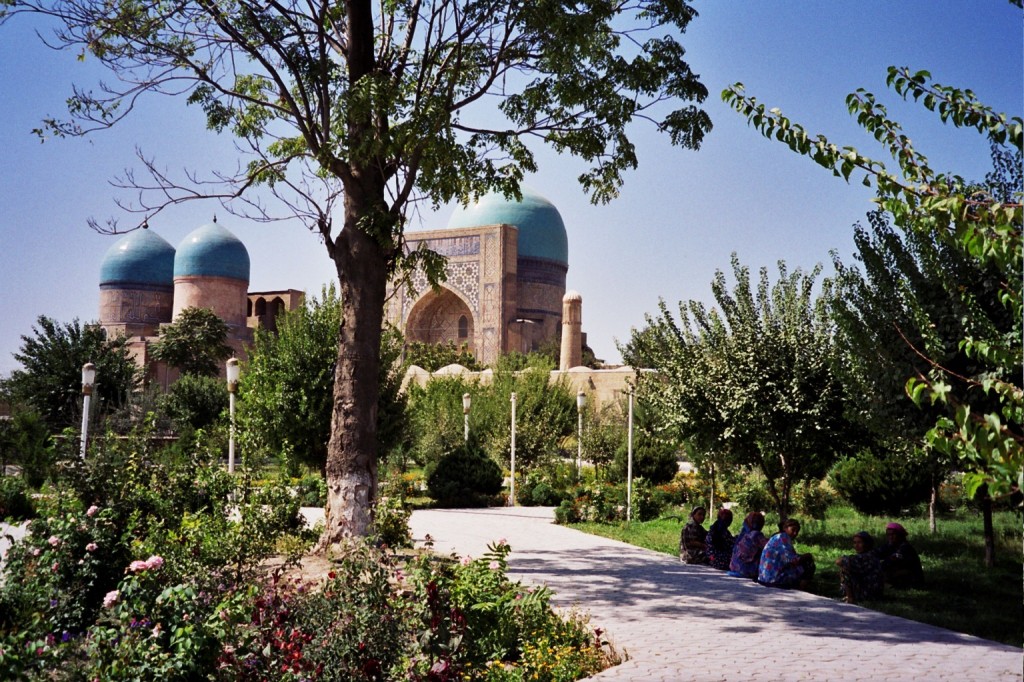
Means “green city” in Persian, Shakhrisabz once was a major city of Central Asia. Located approximately 80 km south of Samarkand, the historic city’ center has preserved its original town plan and offers impressive monuments from 15th-16th century.


Located at the altitude of 622 m, Shakhrisabz was inscribed on the UNESCO World Heritage List. Notable monuments include: Aq-Saray Palace, Tomb of Timur, Kok Gumbaz Mosque, Hazrat-i Imam Complex, The Chor-su bazaar, caravanserai and the baths.

The land of magical lamps


Now we are presenting you Bukhara – the fifth largest city of Uzbekistan. Situated on the Silk Route, the ancient town is more than 2,000 years old. There are many reasons to visit this magical place. The city offers superb historical monuments and a lively trade, every traveller finds something unique in this town.


The historic center of Bukhara is in effect an open-air museum displays many masterpieces of 10th-century Muslim architecture. It has been listed by UNESCO as a World Heritage Site. Major sights are: Fitzroy Maclean, Po-i-Kalan complex, Kalan Mosque, Mir-i Arab Madrassah, famous tomb Ismail Samani, Chashma-Ayub mausoleums, Lab-i Hauz.

Crossroads of Cultures


The historic town of Samarkand is the second largest city in Uzbekistan. Founded in the 7th century B.C the city is most noted for its central position on the Silk Road between China and the West. It is considered as a crossroad of the world’s cultures.


The major monuments include the Registan Mosque and Madrasas, Bibi-Khanum Mosque, the Shakhi-Zinda compound and Ulugh-Beg’s Observatory. In 2001, Samarkand was included in World Heritage List by UNESCO.

Tang Palace


The Tang Palace Restaurant is a stunning contemporary restaurant designed by Beijing-based design firm FCJC. It is located in the new town area of Hangzhou, China. If you like bamboo-covered interiors, then this is the ideal place to go for great food and a creative atmosphere.


The designers used a limited pallet of bamboo material to create a unique design theme of combining tradition and modernity. The interior is enclosed by a flowing grid of bamboo strands that bring the 9 meter-tall room down to human scale. If you are looking for a more intimate meal, the restaurant also features private rooms.


Project: Tang Palace, Hangzhou, China
Location: Jianggan District, Hangzhou, China
Area: 2, 460 m2
Materials: Bamboo, Composite Panel, Rubbed Concrete
Design Team: Yu Yue, Wu Xia, Suiming Wang
Construction Period: February 2010–July 2010